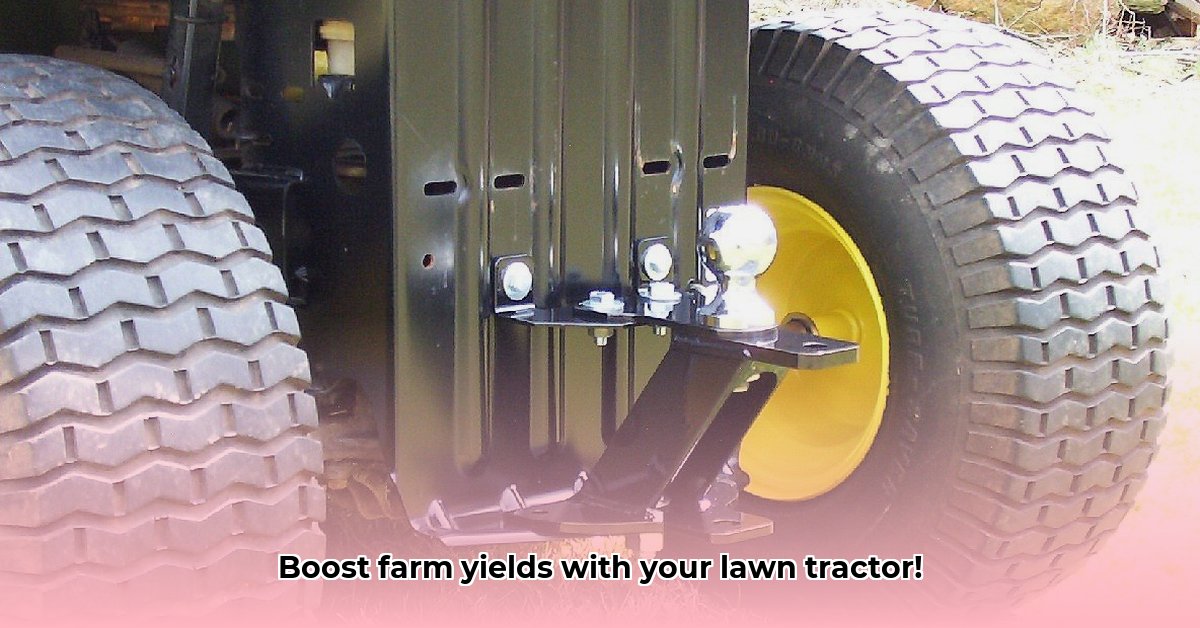
Lawn Tractor Hitch: Your Ticket to a More Sustainable and Productive Farm
Want to boost your small farm's efficiency and sustainability? A lawn tractor hitch might be the answer. This surprisingly versatile tool dramatically increases productivity while reducing your environmental impact. This guide provides a step-by-step approach to selecting, installing, and maintaining a hitch, maximizing its benefits for sustainable farming. We'll also explore essential implements and future trends in this exciting field. For even greater hauling capacity, consider adding a dump cart; check out these dump cart options.
Choosing the Right Hitch: Finding the Perfect Fit for Your Needs
Selecting the right hitch is paramount. Just like choosing the right tool for a specific job, you need the correct hitch for both safety and optimal performance. Consider these factors:
Compatibility: Ensure the hitch is compatible with your specific lawn tractor model. Check your owner's manual or the manufacturer's website. Universal hitches offer more flexibility, while model-specific hitches guarantee a secure fit. Don't risk incompatibility!
Weight Capacity: The hitch's weight capacity is crucial. This determines the maximum weight it can safely handle. Always ensure the capacity exceeds the combined weight of the attached implement and its load. Overloading can lead to breakage and serious accidents. Safety should always come first!
Hitch Types: Common types include Category 0, Category 1, and universal hitches. Each has its strengths and weaknesses. Research which best suits your needs and the implements you'll use. Consult with your local farm supply store for guidance.
Safety Features: Prioritize hitches with robust materials and secure mounting points. Look for features that enhance stability and safety. Remember, a well-built hitch is an investment in safe and productive operation.
Installing Your Hitch: A Safe and Secure Step-by-Step Process
Installing a hitch isn't complex, but accuracy is key. Always consult your specific hitch's manufacturer instructions for detailed steps. Here's a general guide:
Safety First: Work on a level, stable surface. Engage the parking brake firmly and turn off the engine. Safety is non-negotiable.
Precise Alignment: Carefully align the hitch with your tractor's mounting points. Accurate placement is crucial for proper functioning.
Secure Fastening: Use the provided bolts, nuts, and washers to securely fasten the hitch. Tighten everything firmly to prevent movement.
Thorough Inspection: Before connecting implements, inspect the installation for loose connections or misalignments. A weak connection is hazardous.
Test Run: Conduct a short test run to ensure everything operates correctly. This proactive step prevents unforeseen problems later.
Supercharge Sustainability: Essential Implements for Your Hitch
The true potential of a lawn tractor hitch lies in its ability to support sustainable farming practices. The right implements significantly enhance efficiency and reduce your environmental footprint.
| Implement | Function | Sustainability Benefits |
|---|---|---|
| Cultivator | Prepares soil for planting, breaking up clods | Reduces soil compaction, improving water retention and plant health. This minimizes irrigation needs. |
| Aerator | Improves soil aeration and drainage | Enhances root growth, reducing the need for chemical fertilizers. |
| Trailer | Transports produce, supplies, and equipment | Reduces fuel consumption compared to larger vehicles. |
| Spreader | Distributes seeds, fertilizer, or other materials | Allows precision application, minimizing waste and maximizing resources. |
| Brush Hog | Mows and cuts tall grass and weeds | Reduces herbicide use by controlling unwanted vegetation. Saves fuel compared to larger equipment. |
Keeping Your Hitch in Top Shape: Maintenance and Care
Regular maintenance is crucial for the long-term performance and safety of your hitch. A few simple steps will significantly extend its lifespan.
Regular Lubrication: Keep moving parts well-lubricated to minimize wear and tear.
Post-Use Inspection: Inspect the hitch and attachments after each use for damage or loose connections.
Tighten Regularly: Periodically check and tighten all bolts and connections.
Proper Storage: Store the hitch and implements in a clean, dry environment to prevent corrosion.
A Glimpse into the Future: Smart Hitches and Beyond
The future of lawn tractor hitches is promising. Smart hitches incorporating GPS and sensors offer automated guidance, enhancing efficiency and precision. Electric-powered implements further reduce reliance on fossil fuels. These innovative technologies are driving towards truly sustainable farming practices.
Key Takeaways:
- Investing in the right equipment significantly improves sustainability on small farms.
- Lawn tractor hitches offer considerable versatility and efficiency.
- Careful selection and maintenance extend the lifespan of your equipment and reduce environmental impact.